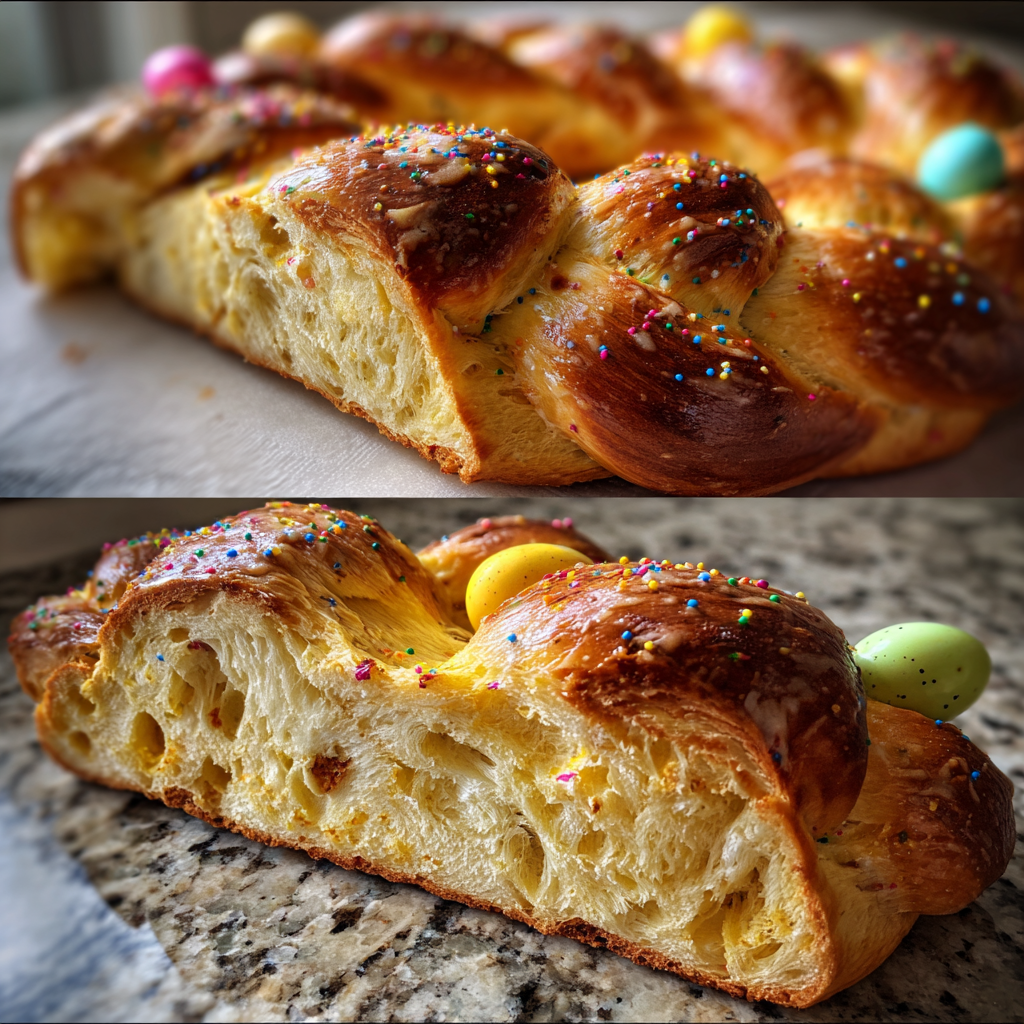
Easter Bread: The Secret to Perfect Golden Loaves at 350°F
Easter bread is a cherished tradition, especially during the spring holidays. This enriched bread, often braided and adorned with colorful eggs, isn’t just visually appealing. It’s also a delightful treat that brings families together. Are you ready to bake a loaf that will become the centerpiece of your Easter celebration?
Imagine the aroma of sweet dough baking in your oven, filling your home with warmth and anticipation. The golden-brown crust gives way to a soft, slightly sweet crumb. It’s studded with hints of citrus and anise. The colorful eggs nestled within the braid add a festive touch, making each slice a celebration of spring.
One of the main ingredients in easter bread is eggs. Eggs are packed with protein and essential amino acids, vital for muscle repair and growth. They also contain Vitamin D, crucial for bone health and immune function. Moreover, eggs are a good source of choline, which supports brain health and memory.
Flour, another key component, provides complex carbohydrates for sustained energy. It also contains Iron, which is essential for carrying oxygen in the blood. Furthermore, flour can be a source of fiber, promoting digestive health and regularity. Choosing whole wheat flour adds even more nutritional value.
Butter, while adding richness and flavor, also provides Vitamin A, important for vision and immune function. It also contains healthy fats that support hormone production and cell function. Interestingly, grass-fed butter is particularly rich in Omega-3 fatty acids, known for their anti-inflammatory benefits.
Citrus zest, often lemon or orange, adds a bright, refreshing flavor and a boost of Vitamin C. Vitamin C is a powerful antioxidant that helps protect against cell damage. In addition, citrus fruits contain compounds that may help boost the immune system. A little-known fact is that citrus zest contains more concentrated flavor than the juice itself!
This easter bread recipe stands out because it uses a slow-rise method. This develops a deeper, more complex flavor. Unlike some recipes that rush the process, this method allows the dough to fully ferment. The result is a lighter, more airy texture. The addition of anise seeds provides a unique aromatic note that complements the citrus beautifully.
This recipe has been a family favorite for generations. It’s perfect for both beginner bakers and seasoned pros. The clear, step-by-step instructions ensure success every time. It’s ideal for sharing with loved ones during Easter brunch or as a thoughtful gift.
This easter bread recipe requires 20 minutes of prep time, 35 minutes of cook time, and yields 8 servings. It is suitable for intermediate bakers and perfect for holiday gatherings or special occasions.
What is Easter Bread?
Easter bread is a sweet, enriched bread traditionally baked and enjoyed during the Easter holiday. It is often braided and decorated with colorful eggs, symbolizing rebirth and new life. The bread itself is typically flavored with citrus and anise, adding a festive touch.
Why You Will Love This Recipe
- The slow-rise method enhances the flavor and texture, resulting in a superior loaf.
- The addition of anise seeds provides a unique and aromatic twist.
- The recipe is easy to follow, even for beginner bakers.
- It’s a beautiful and impressive centerpiece for your Easter celebration.
- The bread stays soft and fresh for several days.
Ingredients You Need
- Active Dry Yeast: Essential for leavening the bread, giving it a light and airy texture.
- Warm Milk: Activates the yeast and adds moisture to the dough.
- Granulated Sugar: Provides sweetness and feeds the yeast.
- Eggs: Adds richness, color, and structure to the bread.
- Unsalted Butter: Contributes to the tender crumb and adds flavor.
- All-Purpose Flour: The base of the bread, providing structure and texture.
- Salt: Enhances the flavors and controls the yeast activity.
- Anise Seeds: Adds a unique aromatic flavor.
- Lemon Zest: Provides a bright, citrusy note.
- Colored Eggs: Symbolizes Easter and adds a festive touch.
How to Make Easter Bread Step by Step
- In a large bowl, dissolve the yeast in warm milk. Add a teaspoon of sugar and let it sit for 5-10 minutes until foamy. This indicates that the yeast is active.
- In a separate bowl, whisk together the eggs, remaining sugar, melted butter, anise seeds, and lemon zest. Add this mixture to the yeast mixture and stir well.
- Gradually add the flour and salt to the wet ingredients, mixing until a shaggy dough forms.
- Turn the dough out onto a lightly floured surface and knead for 8-10 minutes, or until smooth and elastic. The dough should be slightly sticky but manageable.
Pro Tip: If the dough is too sticky, add a tablespoon of flour at a time until it reaches the right consistency. Be careful not to add too much flour, or the bread will be dry.
- Place the dough in a greased bowl, turning to coat. Cover with plastic wrap and let it rise in a warm place for 1.5-2 hours, or until doubled in size.
- Punch down the dough and divide it into three equal pieces. Roll each piece into a long rope, about 18 inches long.
- Place the ropes side by side and pinch them together at one end. Braid the ropes together, pinching the other end to seal.
- Gently transfer the braided dough to a baking sheet lined with parchment paper. Form the braid into a circle, pinching the ends together to create a wreath shape.
- Gently press the colored eggs into the dough at even intervals around the wreath.
- Cover the bread with plastic wrap and let it rise for another 30-45 minutes.
- Preheat oven to 350°F (175°C).
- Bake for 30-35 minutes, or until golden brown. If the bread starts to brown too quickly, cover it loosely with foil.
- Let the bread cool on a wire rack before serving.
Expert Tips for Best Results
- Use a good quality active dry yeast for best results. Make sure it is not expired.
- The milk should be warm, but not hot, to activate the yeast properly. Aim for around 110°F (43°C).
- Do not over-knead the dough, as this can result in a tough bread.
- If you don’t have anise seeds, you can substitute with fennel seeds or a pinch of anise extract.
- For a shinier crust, brush the bread with an egg wash before baking.
- Let the bread cool completely before slicing to prevent it from becoming gummy.
Variations and Substitutions
- Gluten-Free: Use a gluten-free flour blend and a binding agent like xanthan gum.
- Dairy-Free: Substitute the milk with almond or soy milk, and the butter with a dairy-free butter alternative.
- Regional: In some cultures, the bread is flavored with mahlab, a spice made from cherry pits.
- Seasonal: Add dried cranberries or blueberries for a festive winter twist.
How to Serve and Store
Serving: Serve easter bread as part of your Easter brunch or as a dessert. It pairs well with coffee, tea, or a glass of sweet wine. You can also toast slices and spread them with butter or jam.
Storage: Store leftover bread in an airtight container at room temperature for up to 3 days.
Freezing: Yes, you can freeze easter bread. Wrap it tightly in plastic wrap and then in foil. Freeze for up to 2 months.
Reheating: To reheat frozen bread, thaw it overnight in the refrigerator. Then, warm it in a 350°F (175°C) oven for 10-15 minutes.
Frequently Asked Questions
Can I use instant yeast instead of active dry yeast?
Yes, you can. Use the same amount of instant yeast. You can add it directly to the dry ingredients without proofing.
How do I prevent the eggs from cracking during baking?
Hard-boil the eggs before placing them in the dough. This will prevent them from cracking in the oven.
Can I make the dough ahead of time?
Yes, you can. After the first rise, punch down the dough and refrigerate it overnight. Let it warm up slightly before shaping and baking.
What if my dough doesn’t rise?
Make sure your yeast is fresh and the milk is warm enough. Also, ensure the rising environment is warm and draft-free.
Can I add other dried fruits or nuts to the dough?
Yes, you can. Add raisins, currants, or chopped nuts to the dough along with the flour.
Is it necessary to use colored eggs?
No, it’s not. You can use regular hard-boiled eggs or omit them altogether if you prefer.
In conclusion, this easter bread recipe delivers golden, flavorful loaves perfect for your holiday celebration. Its slow-rise method enhances both flavor and texture. Try this recipe today and leave a comment below! [INTERNAL_LINK_1] Also, feel free to share your creations! [INTERNAL_LINK_2]
Print
easter bread: The Secret to Perfect Golden Loaves at 350°F
- Total Time: 3
- Yield: 1 large loaf 1x
Description
A beautifully braided, slightly sweet bread perfect for Easter celebrations. Adorned with colorful eggs, this bread is as delicious as it is festive.
Ingredients
- 2 1/4 teaspoons Active Dry Yeast (or 1 (1/4-ounce) packet)
- 1/4 cup Warm Water (105-115°F)
- 1/2 cup Sugar
- 1 teaspoon Salt
- 4 Eggs (large, divided)
- 1/4 cup Unsalted Butter (melted and cooled)
- 4 cups All-Purpose Flour (plus more for dusting)
- 1 teaspoon Orange Zest (optional)
- 4–6 Raw Eggs (for decoration, dyed bright colors)
- 1 Egg Wash (1 egg beaten with 1 tablespoon milk or water)
- Sprinkles (optional, for decoration)
Instructions
- In a small bowl, dissolve the yeast in warm water. Add a pinch of sugar and let stand for 5-10 minutes until foamy.
- In a large bowl or the bowl of a stand mixer, combine the remaining sugar, salt, 3 eggs, melted butter, and orange zest (if using). Mix well.
- Add the yeast mixture to the wet ingredients and stir to combine.
- Gradually add the flour, 1 cup at a time, mixing until a soft dough forms. If using a stand mixer, knead with the dough hook for 5-7 minutes. If kneading by hand, turn the dough out onto a lightly floured surface and knead for 8-10 minutes until smooth and elastic.
- Place the dough in a lightly oiled bowl, turning to coat. Cover with plastic wrap and let rise in a warm place for 1-1.5 hours, or until doubled in size.
- Punch down the dough to release the air. Divide the dough into 3 equal pieces. Roll each piece into a long rope, about 18 inches long.
- Place the three ropes side by side and pinch them together at one end. Braid the ropes together, keeping the braid loose. Pinch the ends together to seal.
- Carefully transfer the braided bread to a baking sheet lined with parchment paper.
- Gently press the dyed raw eggs into the bread at even intervals along the braid. Make sure they are secure but not cracking the dough.
- Cover the bread with plastic wrap and let rise for another 30-45 minutes, or until slightly puffed.
- Preheat oven to 350°F (175°C).
- Brush the bread with the egg wash and sprinkle with sprinkles (if using).
- Bake for 30-35 minutes, or until golden brown. If the bread starts to brown too quickly, tent it with foil.
- Let the bread cool on a wire rack before slicing and serving.
Notes
- For best results, use high-quality ingredients. The color of the eggs will deepen during baking. Ensure the internal temperature of the bread reaches 200°F (93°C) for complete doneness. Store leftover bread in an airtight container at room temperature for up to 3 days.
- Prep Time: 30
- Cook Time: 35
- Category: Bread
- Cuisine: Eastern European
Keywords: easter bread, braided bread, tsoureki, sweet bread, easter recipe, holiday bread